Thursday, 18 April 2013


A Spring Air*

Spring is here, the days grow long,
Skies are clear now Winter's gone
and dreams of love approach reality.
The once bare boughs of lilac trees
are haunted now by honey bees
and all the world exudes vitality.

*Lyrics © The Amazing Blondel


After so many weeks of cold cheerless weather, I had started to imagine what it must be like for the creatures hibernating through this years seemingly endless winter. Do they long to awake and go out into the fresh new world?

Whilst not exactly in a state of hibernation, I was certainly getting more than a little disenchanted, with what seemed, like an interminable age for spring to get started and for the sun to deliver some new faces down at the local reserve.

Then last Thursday the Great Weather Controller in the Sky decided enough was enough and flicked the switch – within hours it seemed the first House and Sand Martins and a few Swallows were flicking across the main lake. A pair of Oystercatchers had teamed up on the newly water-free area of the bund, which  once again divides the lake and plaintive “cweeeks” in the sky announced the arrival of the first dazzling, dancing, Common Terns of the year.

Willow Warbler

From high vantage points around the woods Chiffchaffs were reminding everyone of their name and the first Blackcaps appeared sneaking through the bushes. Then Willow Warblers started to join the chorus, only to be interrupted by the yaffling laugh of Green Woodpeckers and the lonesome whickering cries of Little Grebes looking for a mate on the ponds and backwaters amongst the trees.
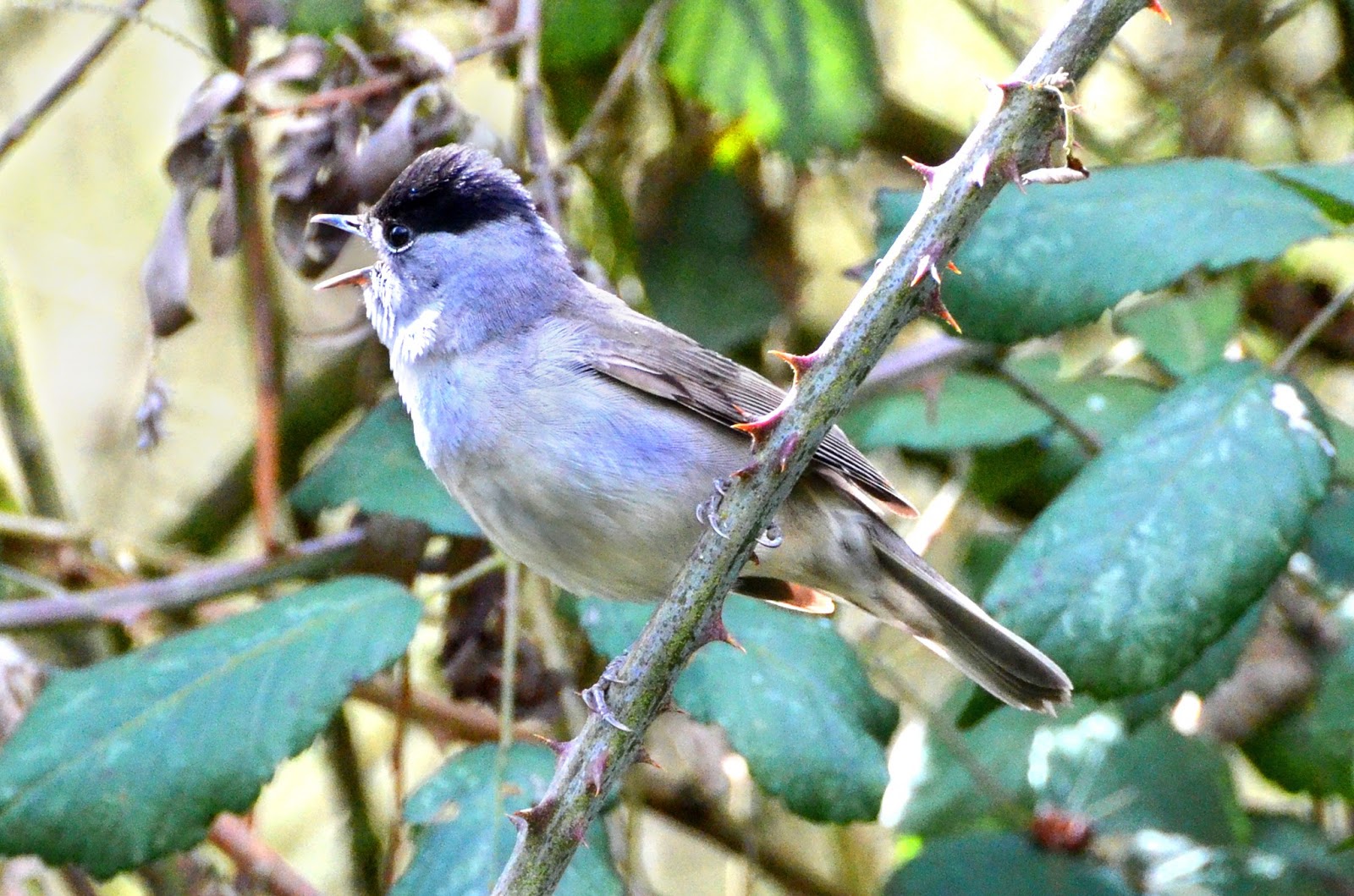
Blackcap

Also in the ponds, Mr Toad (and Mr Frog and Mr Newt) was a courting and I checked back to confirm that this year they were just over three weeks later than last (although of course last March was the exact opposite of this, but with equally unseasonal temperatures of up to 20c by mid-month). 
 
He ain't heavy - two Toad tango

Peacock, Brimstone and Small Tortoiseshell butterflies were also out and about and seemed to be enjoying brief encounters with the opposite sex, as they competed with a few Bumble Bees for the first drops of pollen and nectar among the bushes and trees, which at last, were showing signs of flower and leaf.

Brief encounter - Small Tortoiseshell Butterflies

Not long now and we should hear the first Cuckcoo, the Damsel and Dragon flies will appear and then with luck the Hobbies will return to perform their aerial acrobatics over the lakes and trees in search of prey. Among the fresh meadow flowers the Pyramidal and Bee Orchids will raise their faces to the sun and Grass snakes will come out to bask in warm sheltered places. 

I can’t wait.

It’s good to wake up to spring.

Friday, 8 March 2013

Quelle surprise!

Watching the BBC National News today (08/03/13) and lo and behold - only two days after ToaBV - there they are, featuring a piece on the plight of the Water Vole (although failing to explain the prime reason for the Water Voles dramatic decline - see previous post).

The BBC article showed a nice young man from Dorset Wildlife Trust, explaining how they were clearing river banks to create a more suitable environment for Water Voles, whilst a number of fluorescent chaps from the Environment Agency felled branches, to build a mink restaurant in the middle of a stream (dear auntie Beeb thought that the little floating island represented a safe home).

It's nice to know the BBC are following my lead (if not my blog), but I just hope that they had decided not to mention, the only real way to help save the savaged Water Vole population, lest they offend the squeamish British Public. If not I fear the well intentioned good people of Dorset were wasting their time.

http://www.bbc.co.uk/news/uk-england-dorset-21685649

Wednesday, 6 March 2013


Psycho Killer
Qu'est-ce que c'est

A while back I remember taking umbrage (not the place where the Archers live) at an article written by Robin Page, which seemed to promote an, if it’s got eyes it dies, attitude, to most non-native species and pretty much anything else with the temerity to nibble his rhubarb stick, let alone breath the same air as cattle.

I don’t intend to throw my three pennyworth into the badger v bovine TB debate in this piece – but for a rather interesting twist to that story, check out professor Alice Roberts article in the Guardian, which suggest that cattle may well have first contracted TB from humans – look out homo erectus Robins got his gun.

Now - cue embarrassed blushes - I am about to side with Mr P in what I regard as the open and shut case against the American Mink.

Cute? - not if your a Water Vole or Kingfisher

Following escapes from fur farms between the 1920's and 1950's, the Mink (Neovison vison) has become widely established throughout the UK. Studies conclusively show, that Mink have had a major impact on our native fauna through predation of birds and small rodents. Particularly vulnerable species are kingfisher and the water vole (Arvicola amphibious) (Macdonald & Strachan, 1999), (Strachan, Strachan & Jefferies, 2000).

The studies conclude that, when added to existing habitat degradation, the pressure of mink predation has directly contributed to a 90% decline in water vole populations in many areas.

The Wildlife Trusts (along with other conservation bodies) advocate that (targeted, legal, humane) mink control is essential, if we are to conserve remaining key populations of water vole and to prevent the wholesale slaughter of birds, fish and small mammals by this indiscriminate killer.

Bold as brass - this mink showed little fear when I discovered 
it hunting around the back of our reserve buildings

Why then, does the authority, which manages my beloved local nature reserve, throw up their arms in helpless indifference, when I complain about the number of mink running around the Centre out-buildings and setting up home within yards of their offices. Clear evidence of their infestation and breeding can be seen, but will anybody do anything to prevent them spilling out across the whole reserve? No. The attitude seems to be - it’s too late, what can we do.

In 1992 Water Vole were confirmed as still being present on our site, but already at that time the numbers were identified as in decline, due to the effects of mink predation. Sadly, little if anything was done and Water Vole have not been recorded now for a number of years. Water Shrew (a much smaller mouthful) are still present, but how long will it be before they start to disappear, along with the Moorhen, Coot, Little and Great Crested Grebe and locally breeding ducks. Perish the thought that the Oyster Catchers and Lapwing, that also attempted to breed last year (but unfortunately got washed out) should try again. As for our plans to build a Kingfisher nest site – I don’t think I could bear to face the consequences.

In Scotland and many areas of England, it has proved possible that with a properly conducted programme, involving authorities, conservation bodies and volunteer groups, mink numbers can be sufficiently reduced, to allow Water Voles to recover and repopulate areas where previously they were thought to have gone for ever. It shows that it just needs the right attitude and a modicum of effort.

Come on you dithering councils and procrastinating authorities Qu'est-ce que c'est.

Friday, 15 February 2013

Jumbo Sausages

As the media continue their feeding frenzy on the latest titbits to be released regarding the horse meat scandal, I couldn't help having a chuckle when I saw this advertisement in the local free paper today. 


Clearly the organizers of this even have decided to come clean regarding the meat content of their burgers!

Thursday, 14 February 2013

Recommended Viewing

As a massive fan of things small and furry - did I really just write that - I urge you to take a look at :

http://www.flickr.com/photos/derbyshiredave/8466427890/in/photostream

for some great shots and footage of the now, all too rare, water vole.

Great stuff Dave.

Tuesday, 12 February 2013


Ready, Steady, Cook
Oh dear, poor Clare Balding, according to her recent book, "My Family and Other Animals", dogs and horses have played a central role in her life, but she also admits to enjoying a ready meal or two.
So, following the recent revelations that dobbin has suddenly it seems, become (what many of us who don't quite get "the sport of kings", suspected) a racing certainty to enter the human food chain. Then maybe, the horses in her life have at times been a little more central than she thought.

Sea Pigeon - No Moorhen

It conjures up a rather sick, where are they now of the racing world:

Did Cottage Rake become Cottage Pie, Edredon Bleu - Cordon Bleu, Party Politics - Party Food and Desert Orchid - Dessert.
Fancy a Piebalding?

Thursday, 7 February 2013


A Bridge Too Far

 September 1944. The advances in education are being slowed by overextended supply teachers. The schools say they have few resources and morale is very poor. 103% of all students taking GCSEs score 12 triple A grades or better – something must be done. Plans for changes to qualifications designed to address the grade inflation, dumbing down and loss of rigour in those examinations are prepared.

But, General Gove and Colonel Twigg have competing plans for ending the problem quickly, (and being the first to get re-elected). Under political pressure, Supreme Allied Commander David Cameron chooses Gove's plan Operation Muckup Educating.

Operation Muckup Educating  targets results being dropped as much as 64%  behind guide lines in the Otherlands. The largest examination system assault ever attempted, General Gove says, "We're going to lay a carpet, of academia" over which bamboozled divisions of students can pass and confidently suggests that "We shall seize the Oxbridges - it's all a question of Oxbridges.

After the Muckup Educating command briefing, the teaching unions voice their deep doubts that the plan can work. Head teachers worry about dropping new tests into the curriculum in daylight.

The Liberal Democrats present at that briefing do not question the orders, but Field Marshall Clegg walks up to check the briefing officer's uniform insignia and says "Just making sure whose side you're on." Later, when General Gove briefs his officers, some of them are surprised they are going to attempt a testing system so far from the Oxbridge standard, but they have to make the best of it.

General Gove tells them that the key to overcoming the distance from the drop in standards zone to the Oxbridge, is the use of Ewoks to bring in old fashioned tests of knowledge and understanding. Gove says that if any one group fails, the entire operation fails.

The consensus among the Conservative top brass is that resistance will consist entirely of Labour Youth or old men, but a young British intelligence officer, brings information to General Gove, showing think tanks are dug in and will inevitable crush his plans for an advance in examination standards.

At this point things take a rather more sage turn from the debacle at Arnhem that cost so many allied and German lives as:

Gove announces plans to scrap GCSEs in key subjects in England and replace them with English Baccalaureate Certificates are being abandoned by the government. He said plans for the new exams had been "a bridge too far".