Thursday, 27 September 2012


Misty Mountain Hop pt 2

Monday kicked off the house hunting in earnest with appointments in Salen in the morning and Tobermory in the afternoon. Let’s just say that between them they threw up some very interesting characters and properties but sadly nothing that really fitted the bill.

There was little time for wildlife watching, although I did see another White Tailed Eagle in the distance whilst checking out Salen Bay for Otters. In previous years I have seen a mother and two cubs in this Bay, but having returned several times during the week, it seems they may have left this particular area or have become more secretive.

 Salen Bay – Not so Ottery
 Tuesday involved visits to houses in the Lochdon, Aros and Dervaig areas and meeting some very pleasant people. All had their own potential (the houses I mean) - but I wasn’t sure that I had the bravery or necessary cash to take them on.

Having some free time left in the afternoon I headed up the road from Dervaig to another place I know well - the tiny fishing harbour of Croig.

Croig is so Mull, it hurts. From Croig you can walk west along the northern coast and find superb little sandy coves and beaches, or, as I did, walk out north east to the point (near the monument) and look across to the Ardnamurchan peninsular on the mainland, whilst watching carefully for otters, in and around the many, seaweed covered, rocky inlets.
 
 
One of the beaches north west of Croig
 
I was in luck and spotted an otter fishing well out to sea, but was never in with a chance to get really close. Nevertheless, the rocks on the point made a great place to sit and ponder the riddles of the universe, the meaning of life and what I fancied for dinner at the pub.
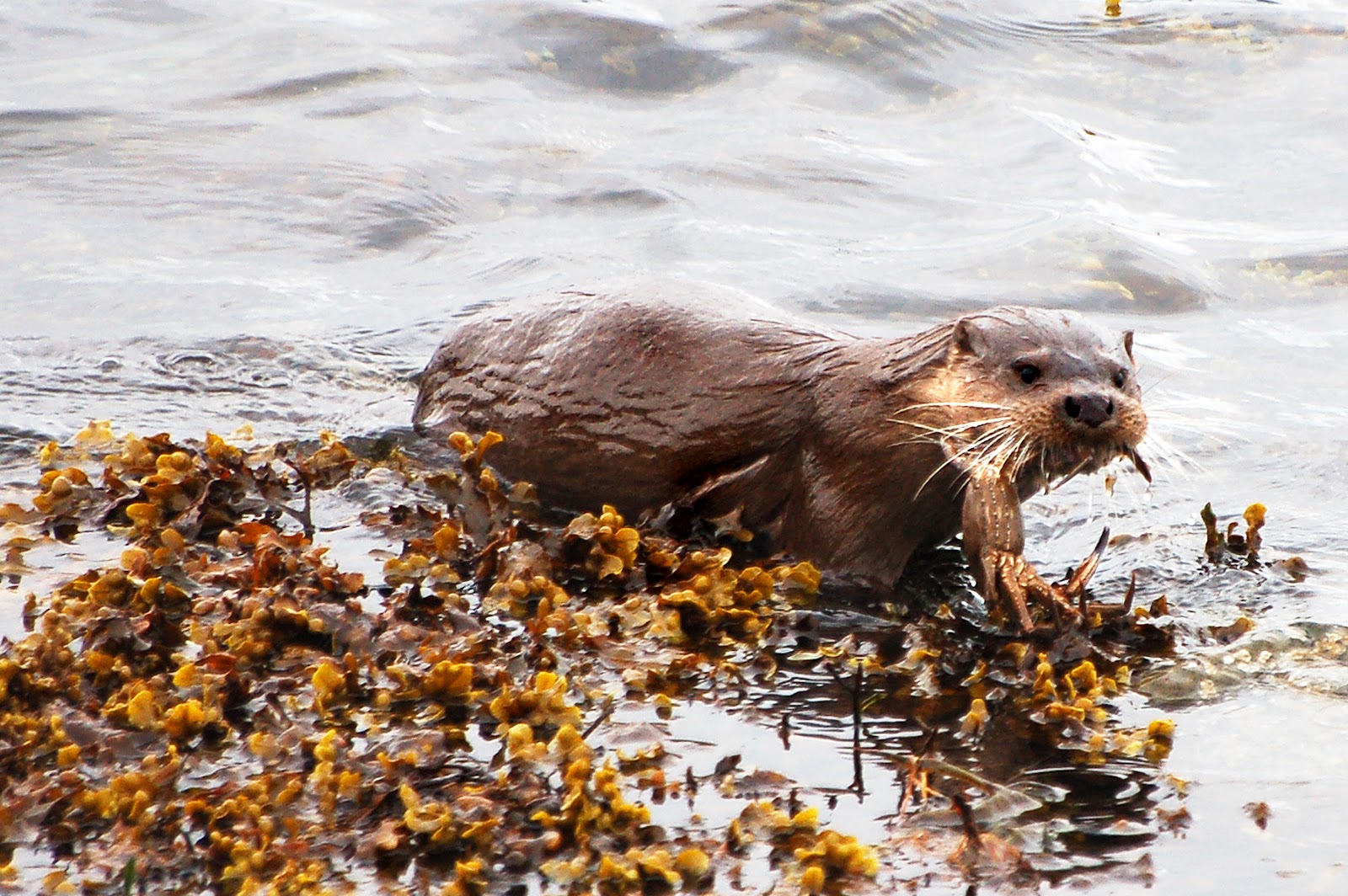
 
This guy clearly fancies the seafood special

Wednesday morning I was back in Tobermory. I had never explored the back roads and lanes of “Tobe” in such detail before and the place was beginning to make me a little depressed. I have to say that, behind its picture perfect frontage, the town reminded me of an old lady who had seen better days, was letting herself go to seed – and what’s more didn’t care.
Tobermoray - lovely icing but has someone left the cake out in the rain?

Wednesday afternoon concluded the scheduled viewings with two more properties back in Dervaig. I did stop off briefly during my travels on Wednesday however, to photograph a tourist eagle – the kind you find sitting on telegraph poles all over Mull and who have little regard for the locals or visitors alike. Unless, of course, you should stray a bit too close and so cause them to flap away lazily into the air.
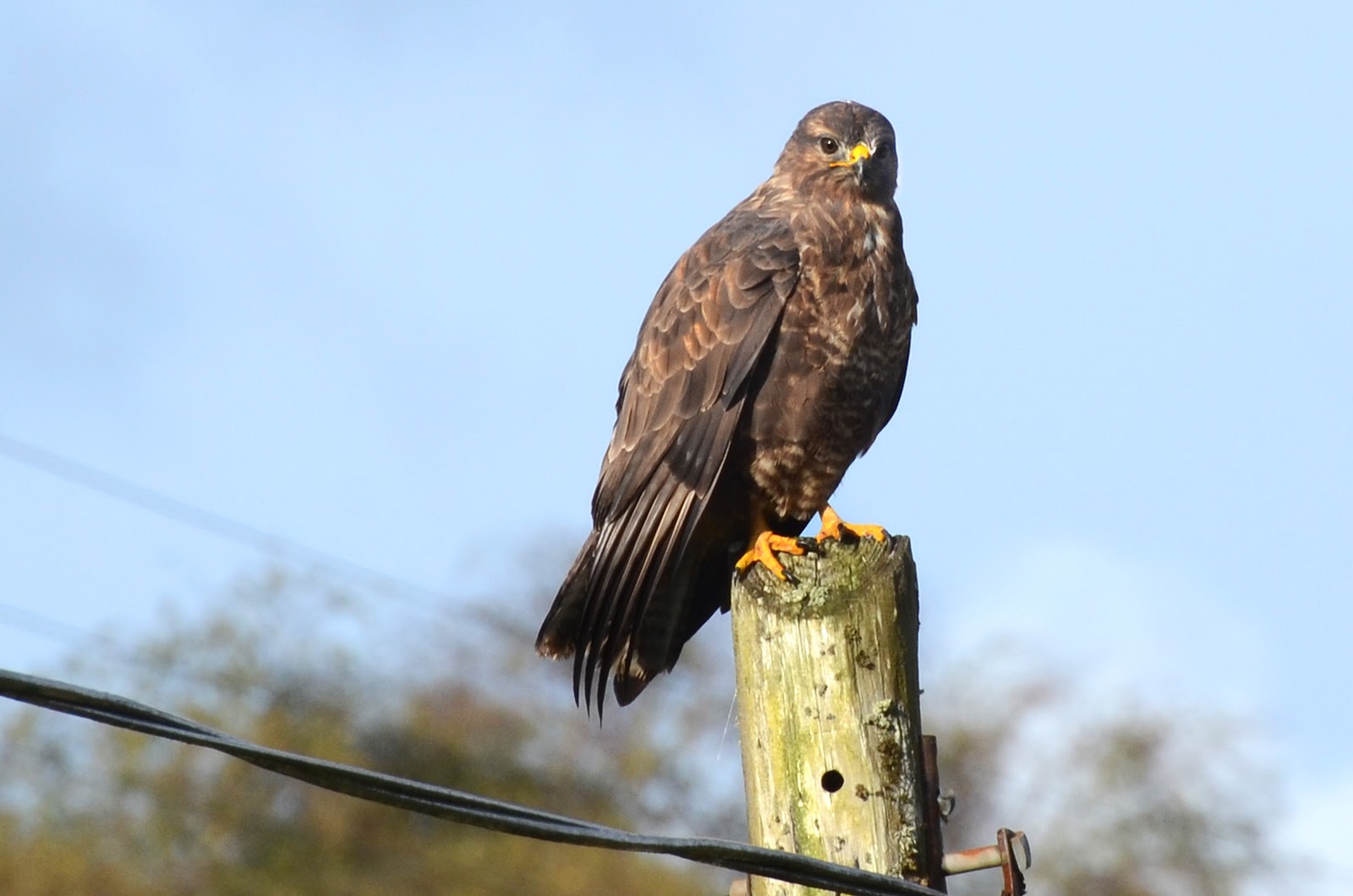
 
Buzzard (Buteo Buteo) (the Tourists Eagle)
"I am a linesman for the county"

Thursday – another quick trip into Tobermoray, back for a second look at a place in Dervaig - then it’s my time again and so over to Calgary Bay, for a walk along the coastal path. Calgary is another good place to spot Golden Eagles soaring high above the cliffs, often accompanied by harrowing Buzzards or noisy Ravens. Once again I was lucky enough to spot an eagle, but a long way off – certainly no photos – and whilst I think it was of the golden variety it could have possibly been a white tailed.
 
Calgary Bay

Calgary is the only place on Mull where you can find a strip of machair between the land and the beach, but at this time of year it really just looks like ordinary grass. The weather (which typically of the west coast, had been variable all week) stayed fine and dry allowing me time to have a pleasant walk round the north edge of the bay, before returning to the cottage and then down the high street to the bar for fish n chips and a pint.

For my last full day I toured round the northern edge of Loch Na Keal then round Loch Tuath, across the moors, back round the coast to Calgary and finally Dervaig. On the way, I made many stops and detours to look for big flappy things or wet furry things, but without luck.

At one stage along the way I did, however, need to negotiate a right (rite?) of passage, with a rather belligerent highland beast who had claimed the single track road as his own  Bealach na Bà.

This 4X4's got a heck of a set of Bull Bars!
 
Having safely agreed terms with shaggy, I then spent some time trying to photograph a Stonechat – they let you get so close, then hop along to the next post, it drives you mad – the final result was not great but after all the effort I’m going to include it anyway.
 
Stonechat - sitting still for 5 seconds

 Friday night at the “Bear Pit” (the local bar) is when the locals come out to play and boy to they know how to enjoy themselves. Their hospitality and generosity belies any stereotyping of Scottish frugalness and it was great to meet with familiar faces again (dare I say friends).
 
I can only hope that it means you are accepted when a Five foot two Hebridean clasps his arms around you and declares “Tony, it’s good to see you again, ya big fat whoo-er”.
 
Craignure Ferry Terminal 7.30 am
 
Sadly, with a Ferry to catch the following morning, I had to curtail the Friday night hospitality and so my latest Mull adventure was over.

Will I go back to live there? It’s a distinct possibility, more than a possibility - but first I have to find the right place and based on this week I'm not sure that will be so easy. But they do say nothing worth having is easy.

No time to brood on what could be however. Sunday morning it was back to reality and I was on duty with the rest of the FoHESC gang at our Open Day, down at the local reserve (see link to FoHESC blog for more details).

Wednesday, 26 September 2012


Misty Mountain Hop


As part of my lifestyle change plans I have been considering for some time a possible move to Scotland and in particular the West Coast and it’s adjacent Islands. Mull has always been a particular favourite of mine with its wonderfully diverse, yet compact landscape, friendly inhabitants and last, but not least, fantastic wildlife.

So it was that a week last Saturday I and the Twasser (VW’s incredibly uneconomic 4X4 cross between a Golf and a Tiger Tank) boarded the ferry at Oban and set sail for Craignure. The plan being to spend most of the week house viewing around the Island, with hopefully a little time left over for some wildlife.

 Speed bonnie boat

I certainly will not be boring you with the details of the house viewing, but let’s just say I may be about to rival  Kirsty and Phil with my new series entitled “Right Location - Wrong House, Right Price - Wrong Location, Right House - Wrong Location, Right House - Wrong Price, etc, etc, etc”.

Following my normal routine, once landed, I nipped up to Tobermory to get a few essentials – milk, wine, bread, wine, eggs, wine, cheese, wine, etc. before heading across to my base at Dervaig. This time however as soon as the goodies were unloaded into the rented cottage, I was round at the neighbours checking out their house, which had just come on the market.

Viewing 1 completed, I returned to the cottage and went out onto the decking behind the kitchen door for a well earned coffee break. Scanning the hill tops – as you do – I spotted one large and two smaller dots. Quickly grabbing the bino’s my hopes were confirmed, as I watched a Golden Eagle being pestered by a pair of Buzzards. Damned demanding this birding on Mull, sometimes you have to go all the way to the back garden.

After a pleasant evening renewing old acquaintances in the bar of the local hotel, Sunday morning involved house viewing 2, down at Lochdon. The owners, who were charming, revealed a little of their life on Mull over a cup of coffee and even suggested another house I might like to look at, near to where I was staying.

Loch Na Keal
The Island to the Right is Inch Kenneth
The site of a house which proved to be the last home of Unity Mitford
 
As I was in the southern half of the Island, after leaving Lochdon, I carried on down to Loch Scridain and then round the south of Ben More before returning home via the southern shores of Loch Na Keal. Although I stopped many times, to scour the hills and mountains where I had seen eagles before – this time I was out of luck. Similar searches of the loch shores for otters also came up blank, although, one of Mulls ubiquitous hoodies decided to give me the evil eye while I took his picture.

 
Hooded Crow (Corvus cornix)

Back at Dervaig, I left the Twasser at the cottage and walked a few hundred yards up the hill, to look for the house I had been told was for sale (very nice, very expensive). Whilst loitering around the property, (trying not to look like a burglar casing the joint), I heard a commotion above me and there, about thirty meters above my head was a White Tailed Eagle, being mobbed by yet another Buzzard.

Of course, the man who goes nowhere without his camera, was at the time, without his.......!

Here’s one that I photographed earlier. White-tailed Eagle (Haliaeetus albicilla)

I nearly typed “here’s one I shot earlier” as I, like many other photographers, often do, when referring to taking a photograph. In this particular instance, this has rather sinister connotations, as the White Tailed Eagle was persecuted to extinction in Scotland during the late 19th and early 20th centuries. The last British white-tailed eagle is recorded as being shot in 1918.

After a faltering start, involving reintroduction programs on Rum and Skye in the 1970s, the White Tails finally got going in earnest on Mull, and as of last year there were 15 breeding pairs on the Island. The controversy regarding their reintroduction has not gone away, however. Talking with the locals, there seems to be a renewed unrest amongst the farming community, who are again complaining about the increasing number of lambs taken by the WTEs.

In economic terms it is easy to argue that the tourist revenue that the eagles bring to Mull (estimated at £5 million) far, far exceeds the value of the lambs taken – and they are taken (during my short visits to the Island, even I have witnessed at least one lamb being carried to a nest). But, I can also understand the farmers zealous protection, care and concern for their animal’s welfare, that generations of struggling against nature and the elements has instilled in them. Despite the compensation payments and various pro WTE arguments, it must very much run against the grain for Mull’s farmers to stand-by helpless, as newly born members of their flocks head skywards in a merciless pair of talons.
 
Emotive words I know, but as the WTE population grows, this thing is going to need constant and careful handling by the Scottish RSPB, Forestry Commission and the other responsible bodies in order to avoid the situation where tempers fly and guns go off.

To be continued.

Saturday, 25 August 2012

Ardea Cinerea

The every day stories of simple Heron Folk


"I've been watching those Gulls and Terns, they sit on these posts, then fly off and catch fish - I could do that"

 
"Easy now"


"Carefully does it"


"And seamlessly he blends into the background"


"Whoops ! "


"Good, nobody was looking - I think I got away with that"


"And now for a triple axel and pike"


"Mmmm - I like pike"

 
"Eat your heart out Tom Daley"

Monday, 13 August 2012


Shades On – Part Deux

Following on from my previous moan regarding Dragonflies total lack of consideration, for the rank novice odonatologist (apologies if this is not the pukkah word), the little blighters have been testing me again this last week, but, thanks, to the aforementioned Guide, a tad of luck and a smidgeon of advice from the pros, this time I think I have them covered.

First up my mate the Ruddy Darter - he of the sexual gymnastics (not yet an Olympic sport). This chap posed superbly and I like to think this is one of my better dragon pics so far.


Having captured a good snap of the little red fellow, for reasons best known to myself, I decided to take some more pictures of another Ruddy Darter sitting on a fence rail. But – on checking the picture out, I noticed the yellow patches on the thorax and yellow leg stripes that indicated this is in fact a Common Darter (Sympetrum striolatum). Tick.


Now at this stage please forgive my slightly less than scientific approach, but I can’t help thinking that the head on view of many dragonflies look remarkably like a rather jolly US helicopter pilot, peering out of his bubble canopy. It’s not just me, is it?

I even managed to correctly identify with almost no outside help (thanks Tony F and Graeme) the very similar Southern Hawker and Migrant Hawker.

 Southern Hawker


Migrant Hawker

In order to keep a sense of perspective I have once again included a picture of one of the real pros when it comes to insect spotting. Long-tailed Tits have the saddest, pleading eyes, don’t you think?


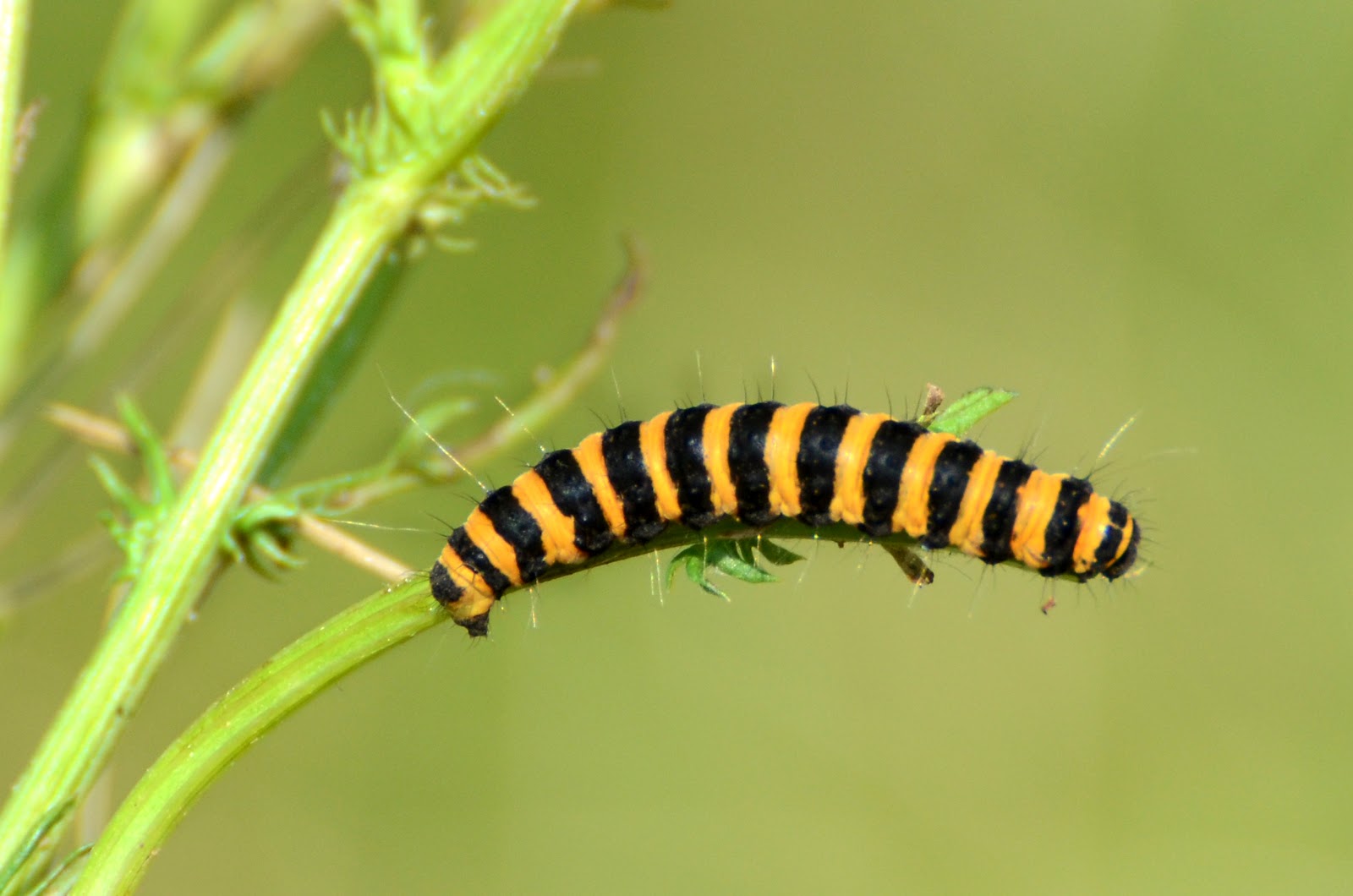
Last week the FoHESC put on a very successful Bat and Moth evening, which was well attended, a lot of fun and very informative, however, with over 8000 European species of Moth, I may just put my adoption of Moths as an additional identification challenge, on hold for a bit. The caterpillar of the Cinnabar Moth is just about within my ID skills though, thanks to its distinctive eye catching colour scheme (hope you Dragonflies are taking note).

 Cinnabar Moth Caterpillar

This particular individual was found munching away on its chosen food plant – Ragwort – even though the plant was an odd straggler, that escaped the recent cutting of the meadows and was in a pretty exposed position, leaving the caterpillar in full view of anything that fancied a colourful meal. Even more surprising, it was in exactly the same exposed position several days later, which I can only assume means that, this is one very fortunate individual or the warning colour scheme really works.

Or do they just taste bad?

Tuesday, 24 July 2012


Shades On

Warning this post contains sexually explicit material

(That should get the number of hits up)


As you will have gathered from my previous posts, I am very much a beginner when it comes to dragonflies, but as the local birdlife is pretty quiet at this time of year, I have thrown my lot in with the dubious crowd that (seriously) study these wee beasties, in an attempt to broaden my horizons.


Having purchased the bible – Field Guide to Dragonflies and Damselflies of Great Britain and Ireland by Steve Brook (illustrations by Richard Lewington) – I started the process of (mentally) ticking the species I see and recognise and where possible try to get a half decent photograph for future reference, personal gratification and most importantly to try and wind up my expert odo spotting mates at FoHESC.  Unfortunately the latter usually backfires when I proudly display my picture, but have to follow it up with, "I like this picture - but what is it?"


At first it seemed to be going well, Hairy dragonfly – tick, Four-spotted chaser – tick, Emperor – tick, a piece of cake this dragonfly business, then the wheels started to fall off. Clearly the dragonflies had not read the book, had failed to properly adhere to the designated colour scheme or were in fact colour-blind.

 Four-spotted Chaser, very numerous at the moment and real posers

Males and females have different livery, OK, we can cope with that, although it doesn’t help that males often start off pretty darn similar in colour to the ladies. Then a la David Bowie, the boys undergo a number changes in persona, before arriving at the finished article (I assume David is now the finished article). Let me try and demonstrate my confusion, with a few pictures of Ruddy Darters (No, I’m not being disparaging – that’s what Sympetrum sanguineum are called).

The first picture is of a female (I think) but when immature the male looks very similar indeed.


This picture shows the beginning of the colour change in a male but according to the guide he is not yet mature.


Whoa! – immature my foot, big boy’s come of age and doing his funky stuff with Mrs Ruddy D in what I understand is the tandem position (please don’t try this at home).


The pair remained coupled and flew in tandem over the pond surface whilst the female dipped her ovipositor into the water at frequent intervals to lay her eggs, these should hatch into larvae in a few days and emerge as dragonfly in about a year.

Returning to the same spot a couple of hours later I found that the gent was really living up to his name and had become a bright red. Of course I cannot be certain that it was the same dragonfly, although in view of the small numbers of Ruddy Darters in that area I think it may have been. The weather was very warm and sunny – maybe that hastens the colour change – or does the act of mating kick off the change? Hopefully someone will enlighten me.


Male Ruddy Darter (Sympetrum sanguineum) in full colour

It was nice also to observe that I was not the only one looking for flies that afternoon. This Reed Warbler seems to have amassed a pretty impressive collection, which I assume were en route to junior.


If you enjoy any of my photographs or would like to see more, please click on the link to my flickr site at the top right of this page.

Tuesday, 3 July 2012


Murder from the Oriental Empress

Sorry this is going to be a fairly quick post this week as most of my creative juices over the last week or so seem to have been pumped into the FoHESC Blog, and the Save St Peters campaign. Not just creatively dry, but physically drained too, having shed blood sweat and tears on a number of far too physical projects down at the Hanson Centre (in some particularly sultry weather) whilst being transfusion vamped by the rampaging mosquitoes.

I do however have at least one interesting encounter with the pond side battle for survival to recount and hopefully also, a couple of snaps for the ToaBV faithful to enjoy.
On Sunday morning the weather was quite pleasant – sunny if not overly warm – and so I stationed myself near to a pond which had contained quite a few dragonflies the week before, in the hope of a good photo opportunity. If you have seen the FoHESCBlog you may remember the photo of the female Emperor Dragonfly ovipositing, whilst a Four-spotted Chaser hovered nearby, apparently curious, although I’m sure there was a more basic reason involved (food or sex usually covers it).
Anyway the lady in question was definitely for turning and turning ugly at that, as a whirling mass of odonata rattled past my head and alighted in the nearby grass. At first I thought they were mating, but the tiny but unmistakable sound of crunching combined with Mrs Emps jaw grip on the poor unfortunate 4-spots thorax (the head had been bitten off and can be seen on her lower wing) confirmed that dinner was served. Because there was quite a lot of grass around them, it was difficult to get a good, clear, picture but I hope these give a reasonable idea of the scene.
She's only gone an bitten is ead orf
Love Bite?
(At least vampires leave the heads on while they suck the goodness out)

Finally Mrs E got fed up with the paparazzi intruding on her lunch date and with the now diminishing 4-SC firmly clamped in her jaws, relocated beyond my reach. Back on the path however, was a male Black-tailed skimmer – the first I have seen so far this year in the masculine blue livery and very nice too.
Black-tailed skimmer

The knees were now starting to give out with standing for too long in one place, so I walked on round the reserve and was rewarded with these pictures of the Pyramidal Orchid (now a little further in bloom)
The flowers have opened out further since my last picture (see FoHESC Blog)
a Marbled White Butterfly

and A Large Skipper Butterfly.
My what a long proboscis you have
We seem to have Small and Large Skippers on the reserve at the moment (although I have to confess that I am not experienced enough to be totally confident of the differences - I did also think we had Essex Skippers but have since been corrected).

Finally, and with a bit of luck, the Common Terns might hoover up a few of the mosquitoes along with the flies they are catching over the water.

A good morning for all (well apart for one).

再見 for now.

Sunday, 24 June 2012


Paxton – Far from the Pits (But Close to Home)

On Tuesday last, I paid a visit to Paxton Pits, a reserve I was keen to see for a number of reasons, not least of which, was because in many ways, it is similar to our own reserve at HESC.

Paxton Pits can be found about 2 miles north  of St Neots,  just off the A1 and thanks to the new A421, can be reached from MK in not much over 35 minutes.

Like HESC Paxton has evolved out of old gravel workings, but at around 190 acres it is nearly double the size. Paxton is also much younger than HESC, having been officially opened as a Local Nature Reserve (LNR) in 1989.  Parts of the site are still being worked and are currently closed to the public, however, when these workings are phased out over the next ten years, they too will be incorporated into the LNR which will make the site nearly 700 acres in size.

The reserve like HESC consists of a mixture of lakes and meadows, bordered on the east by the river Great Ouse. The lakes and meadows are larger than those at HESC and overall it feels a lot less wooded and more open than the MK site.
Heronry South Lake
Many of the species of birds, mammals, reptiles  and insects are also similar to those we get at the Hanson Centre, although Paxton has the attraction of Nightingales for the birders (Turtle Dove were also present when I visited) and for the Dragonfly enthusiast the site holds the rare Norfolk Hawker.

At the time of my visit the lakes held good numbers of Common Tern, interspersed with B H Gulls and a fair few Cormorants. There were also quite a few rafts of Tufted Duck on the water. The Kingfisher hide failed to live up to it’s name but I was reliable informed by the locals that not only Kingfisher but also Otter can be regularly spotted from this viewing point.
Common Tern Whizzing Past The Kingfisher Hide
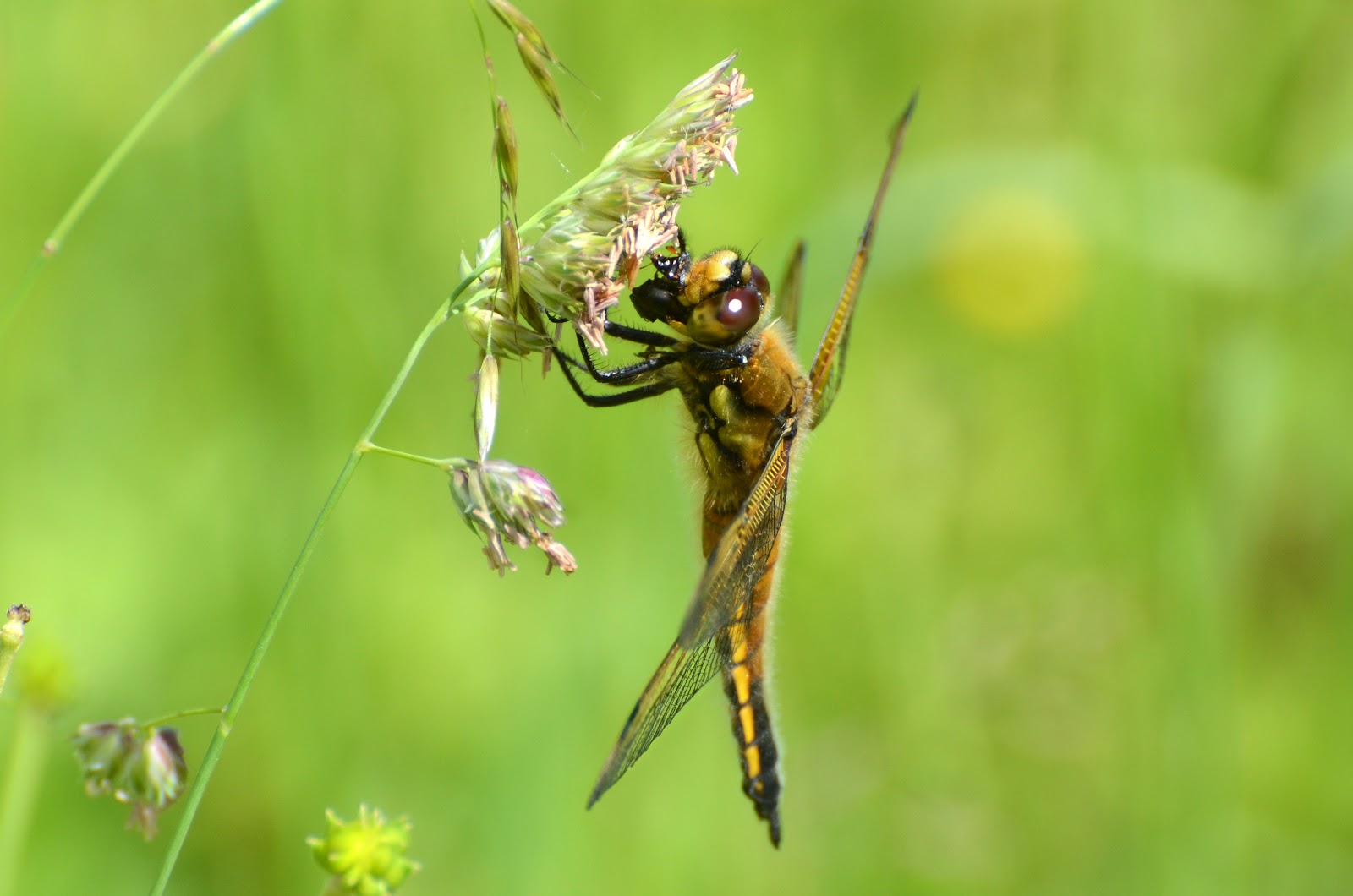
After spending some time exploring the lakes and following the Heron Trail, which is about 2 miles long, I back-tracked to the Visitor Centre, to explore the Meadows Trail (1.5 miles), where I was told my best chances of encountering the elusive Norfolk Hawker lay. Although the meadows did hold quite a few Dragonflies, I was unable to identify the invader from the east. During my search I did manage a close encounter with a Four-spotted Chaser munching a large black bug and then came across a Common Spotted Orchid growing by the side of the pathway.
Common Spotted Orchid
By this time I was ready for a sit down and a cold drink and so I returned to the Visitors Centre and enjoyed a long chat with Jim Stevenson the full time Ranger and two of the volunteer wardens from the friends group. I was particularly interested to learn how the reserve is run and managed.

They explained that Huntingdonshire District Council’s Countryside Services is responsible for the Reserve, whilst the Ranger manages the Reserve according to the Management Agreement under the terms of the Local Nature Reserve (LNR) designation.The Ranger is advised by a Management Group, which includes local experts, Natural England, landowners within the LNR, The Friends of Paxton Pits Nature Reserve, the Volunteer Warden Coordinator and the two Aggregate Companies.

Much of the funding for projects and help in maintaining the site is provided by the Friends of Paxton Pits Nature Reserve which has over 2000 members. I was amazed to hear that the reserve receives around 120,000 visitors a year, although it should be remembered that in many ways it is a public park, with free entry and allows dog walking and fishing on some of the smaller lakes.

The FoPPNR volunteer wardens and rangers staff the Visitors Centre and provide information to visitors as well as selling light refreshments, a few books, maps, bird seed and feeders etc.
Four-spotted Chaser taking afternoon tea
(I am told the Scarce Chaser is more common on this reserve!)
I was made extremely welcome by the people at Paxton and will certainly return soon. For me the visit was very inspirational and I came away thinking that whilst not all that they do at PP would be right for HESC, we could certainly learn from many of their initiatives.