Monday, 13 May 2013

Fledging

Due to a dodgy back I have been using my conservatory as my office for the last week or so (the table and chair height are more sympathetic to my condition - unlike many so called friends). An unexpected benefit to my location has been the ability to watch, close up, the daily struggles of a pair of blackbirds bringing up baby.

I say baby, because there is now, it seems, only one survivor - although having not been able to see into the nest, there may, of course, have only been one hatchling.

During my time watching I have witnessed the two brave parents trying to repel a number of raids from a magpie, whilst each time, a carrion crow sat atop the tree waiting to see what it could pick up from the melee. You shouldn't attribute evil to wild animals - but I confess I found it all a bit hard to accept, even though I know full well, that this is how it is, for millions of birds every day.

It was shortly after this noisy fracas that I first noticed junior bouncing around the lawn, not sure whether his priority was food, or finding shelter. To be honest I didn't give a lot for his chances.  So I was delighted a day later, to see a pair of eyes peering at me from the bush just outside my conservatory window


Meanwhile the fearless twosome, in between feeding their surviving offspring, have quite literally chased one of the neighbourhood moggies out of the garden and ferociously  set about a pair of bewildered pigeons who had planned on clearing up some seed spilt from a feeder.

Grubs Up

The young bird has fallen off its perch at least once to my knowledge and then reappeared on another branch - I wonder how much longer it can keeping dodging fate. I find it all a bit stressful, wanting to help, but knowing the best thing is to leave it to the parent birds and trust to luck.

Another youngster dodging natures metaphorical bullets was a newly fledged, and very stub tailed, Song Thrush, which I almost stepped on when exiting a hide Sunday morning.


Fortunately, this little chap had got enough flight in him to acquire a branch on the nearest tree. Giving me the opportunity to get a quick photo and wish him luck for the future.

Wednesday, 8 May 2013

Go Wild, Go Wild
Go wild in the country
Where snakes in the grass are absolutely free


The grass snake, one of the many, many British creatures on my list of would like to photograph, has up to this last week, very successfully been avoiding my camera. Yes, over the last few summers, I have probably seen a dozen or more grass snakes - but by the time I could bring my lens to bear, all that has remained in view of the reptile, has been a tail slithering undercover. 
Last summer (no camera with me), I even picked a large, presumably therefore, female, grass snake off the local village high street  and removed it to a safer environment. Such was it's gratitude, that it immediately deployed it's extremely smelly defense system, by weeing and pooing on me. A sure way of not being crowded in the pub.
I finally managed to break my duck last Sunday, when I spotted a - what I estimate as about 1 metre long - grass snake having a kip in a sheltered sunny spot, on the side of a meadow. Fortunately, it took a few seconds before realising I was there, which enabled me to get this picture.

I would still like to eventually get the classic head on, tongue out view, but I was very happy to at last get a reasonable shot. 
I was even happier to round the bank holiday weekend off, with what I suspect may be a, not to be repeated (or at least for a long while) photo opportunity, with one of the members of the heard but not often seen club, the Grasshopper Warbler.
The Grasshopper Warbler - Locustella naevia
The RSPB website describes the "Groppers" song as high, insect-like and reeling. Other descriptions liken it to the ratchet sound of line being pulled off a fishing reel. To my ears, it does seem to have an almost mechanical edge to it.

Although relatively  easy to hear and recognize, the song does not always give it's owner's location away, due to what is described as a ventriloquial effect. Normally - the books say - this bird keeps a low profile by creeping about the foliage, however this particular individual was content to sit in fairly plain view and deliver his song to the world, whilst I snapped away.
As it sang this bird's tail vibrated furiously
Sadly, I read that a dramatic population decline has put this bird on the species Red List - a trend which I hope our local visitors are planning to resist.


Thursday, 18 April 2013


A Spring Air*

Spring is here, the days grow long,
Skies are clear now Winter's gone
and dreams of love approach reality.
The once bare boughs of lilac trees
are haunted now by honey bees
and all the world exudes vitality.

*Lyrics © The Amazing Blondel


After so many weeks of cold cheerless weather, I had started to imagine what it must be like for the creatures hibernating through this years seemingly endless winter. Do they long to awake and go out into the fresh new world?

Whilst not exactly in a state of hibernation, I was certainly getting more than a little disenchanted, with what seemed, like an interminable age for spring to get started and for the sun to deliver some new faces down at the local reserve.

Then last Thursday the Great Weather Controller in the Sky decided enough was enough and flicked the switch – within hours it seemed the first House and Sand Martins and a few Swallows were flicking across the main lake. A pair of Oystercatchers had teamed up on the newly water-free area of the bund, which  once again divides the lake and plaintive “cweeeks” in the sky announced the arrival of the first dazzling, dancing, Common Terns of the year.

Willow Warbler

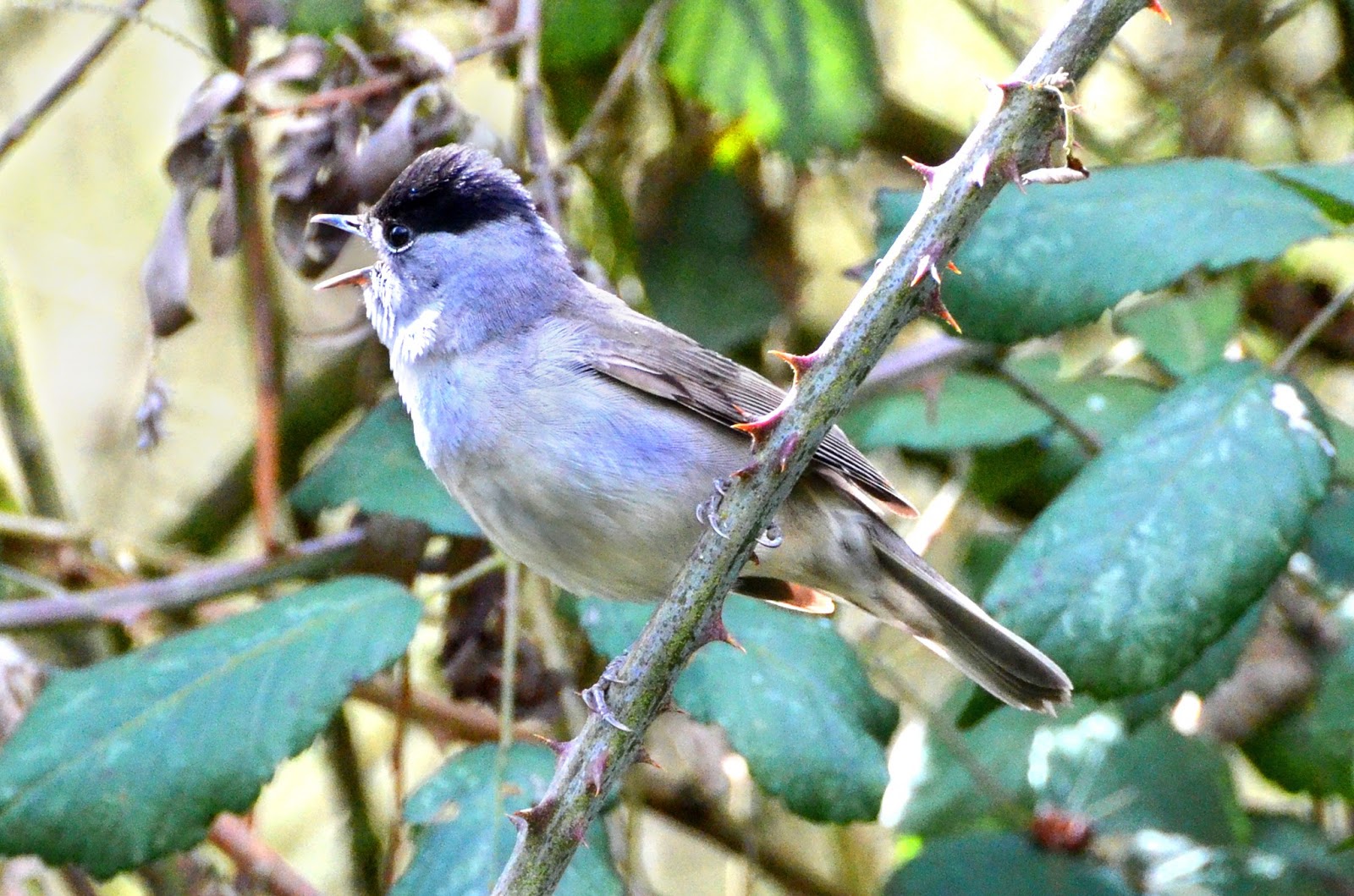
From high vantage points around the woods Chiffchaffs were reminding everyone of their name and the first Blackcaps appeared sneaking through the bushes. Then Willow Warblers started to join the chorus, only to be interrupted by the yaffling laugh of Green Woodpeckers and the lonesome whickering cries of Little Grebes looking for a mate on the ponds and backwaters amongst the trees.

Blackcap

Also in the ponds, Mr Toad (and Mr Frog and Mr Newt) was a courting and I checked back to confirm that this year they were just over three weeks later than last (although of course last March was the exact opposite of this, but with equally unseasonal temperatures of up to 20c by mid-month). 
 
He ain't heavy - two Toad tango

Peacock, Brimstone and Small Tortoiseshell butterflies were also out and about and seemed to be enjoying brief encounters with the opposite sex, as they competed with a few Bumble Bees for the first drops of pollen and nectar among the bushes and trees, which at last, were showing signs of flower and leaf.

Brief encounter - Small Tortoiseshell Butterflies

Not long now and we should hear the first Cuckcoo, the Damsel and Dragon flies will appear and then with luck the Hobbies will return to perform their aerial acrobatics over the lakes and trees in search of prey. Among the fresh meadow flowers the Pyramidal and Bee Orchids will raise their faces to the sun and Grass snakes will come out to bask in warm sheltered places. 

I can’t wait.

It’s good to wake up to spring.

Friday, 8 March 2013

Quelle surprise!

Watching the BBC National News today (08/03/13) and lo and behold - only two days after ToaBV - there they are, featuring a piece on the plight of the Water Vole (although failing to explain the prime reason for the Water Voles dramatic decline - see previous post).

The BBC article showed a nice young man from Dorset Wildlife Trust, explaining how they were clearing river banks to create a more suitable environment for Water Voles, whilst a number of fluorescent chaps from the Environment Agency felled branches, to build a mink restaurant in the middle of a stream (dear auntie Beeb thought that the little floating island represented a safe home).

It's nice to know the BBC are following my lead (if not my blog), but I just hope that they had decided not to mention, the only real way to help save the savaged Water Vole population, lest they offend the squeamish British Public. If not I fear the well intentioned good people of Dorset were wasting their time.

http://www.bbc.co.uk/news/uk-england-dorset-21685649

Wednesday, 6 March 2013


Psycho Killer
Qu'est-ce que c'est

A while back I remember taking umbrage (not the place where the Archers live) at an article written by Robin Page, which seemed to promote an, if it’s got eyes it dies, attitude, to most non-native species and pretty much anything else with the temerity to nibble his rhubarb stick, let alone breath the same air as cattle.

I don’t intend to throw my three pennyworth into the badger v bovine TB debate in this piece – but for a rather interesting twist to that story, check out professor Alice Roberts article in the Guardian, which suggest that cattle may well have first contracted TB from humans – look out homo erectus Robins got his gun.

Now - cue embarrassed blushes - I am about to side with Mr P in what I regard as the open and shut case against the American Mink.

Cute? - not if your a Water Vole or Kingfisher

Following escapes from fur farms between the 1920's and 1950's, the Mink (Neovison vison) has become widely established throughout the UK. Studies conclusively show, that Mink have had a major impact on our native fauna through predation of birds and small rodents. Particularly vulnerable species are kingfisher and the water vole (Arvicola amphibious) (Macdonald & Strachan, 1999), (Strachan, Strachan & Jefferies, 2000).

The studies conclude that, when added to existing habitat degradation, the pressure of mink predation has directly contributed to a 90% decline in water vole populations in many areas.

The Wildlife Trusts (along with other conservation bodies) advocate that (targeted, legal, humane) mink control is essential, if we are to conserve remaining key populations of water vole and to prevent the wholesale slaughter of birds, fish and small mammals by this indiscriminate killer.

Bold as brass - this mink showed little fear when I discovered 
it hunting around the back of our reserve buildings

Why then, does the authority, which manages my beloved local nature reserve, throw up their arms in helpless indifference, when I complain about the number of mink running around the Centre out-buildings and setting up home within yards of their offices. Clear evidence of their infestation and breeding can be seen, but will anybody do anything to prevent them spilling out across the whole reserve? No. The attitude seems to be - it’s too late, what can we do.

In 1992 Water Vole were confirmed as still being present on our site, but already at that time the numbers were identified as in decline, due to the effects of mink predation. Sadly, little if anything was done and Water Vole have not been recorded now for a number of years. Water Shrew (a much smaller mouthful) are still present, but how long will it be before they start to disappear, along with the Moorhen, Coot, Little and Great Crested Grebe and locally breeding ducks. Perish the thought that the Oyster Catchers and Lapwing, that also attempted to breed last year (but unfortunately got washed out) should try again. As for our plans to build a Kingfisher nest site – I don’t think I could bear to face the consequences.

In Scotland and many areas of England, it has proved possible that with a properly conducted programme, involving authorities, conservation bodies and volunteer groups, mink numbers can be sufficiently reduced, to allow Water Voles to recover and repopulate areas where previously they were thought to have gone for ever. It shows that it just needs the right attitude and a modicum of effort.

Come on you dithering councils and procrastinating authorities Qu'est-ce que c'est.

Friday, 15 February 2013

Jumbo Sausages

As the media continue their feeding frenzy on the latest titbits to be released regarding the horse meat scandal, I couldn't help having a chuckle when I saw this advertisement in the local free paper today. 


Clearly the organizers of this even have decided to come clean regarding the meat content of their burgers!

Thursday, 14 February 2013

Recommended Viewing

As a massive fan of things small and furry - did I really just write that - I urge you to take a look at :

http://www.flickr.com/photos/derbyshiredave/8466427890/in/photostream

for some great shots and footage of the now, all too rare, water vole.

Great stuff Dave.